
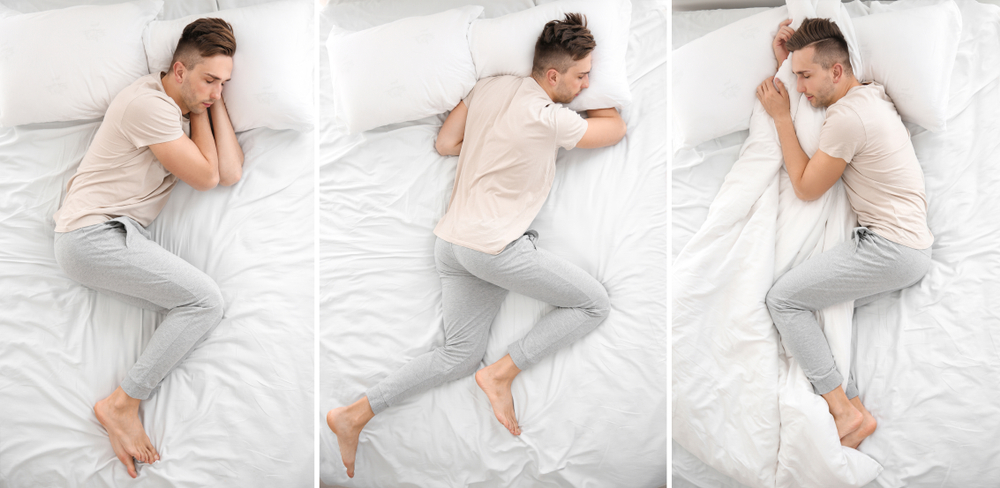
Scroll through mattress blogs or health articles online, and you’ll likely encounter advice about the “healthiest sleeping position” for your body. Side sleeping is best for digestion. Back sleeping is ideal for spinal alignment. Stomach sleeping is terrible for your neck. The list goes on.
But here’s what mattress experts at Texas Mattress Makers have learned after 45+ years of helping Houston residents find their perfect sleep: there isn’t one universally healthiest sleeping position that works for everyone.
| What matters most is finding a mattress that properly supports your body in whatever position is natural for you — whether you prefer to sleep on your side, back, stomach, or any combination of them. |
The truth is simple — if your mattress provides proper pressure relief while maintaining healthy spinal alignment, you can get quality, restorative sleep in any position you want. Our mattress experts are here to answer the most common questions about sleeping positions and help you understand why your mattress choice matters far more than forcing yourself into an uncomfortable position.
Is there really one healthiest sleep position?
You’ve probably heard that certain positions are better or worse for your health. While some positions can help with specific medical conditions — and we’ll cover those — no one sleep position is “healthier” for you than another. Here’s why this idea that you should force yourself to sleep a certain way is misleading:
Your body naturally gravitates toward positions that feel comfortable. When you’re sleeping well and waking up refreshed without pain, your body has found its ideal position for sleeping. Over time, healthy mattress body impressions form naturally as your mattress conforms to your body shape in this position, promoting proper spinal alignment and pressure relief. They’re not a sign of a worn-out mattress; they’re actually key to comfortable sleep. Before you try to force yourself into an unnatural position, consider whether your mattress is adequately supporting your preferred one.
| The problem isn’t usually your position — it’s your mattress. Hip pain from side sleeping? Your mattress isn’t cushioning the joint properly. Waking up with lower back pain? Your mattress isn’t supporting your spine’s natural curve. This is a sign you need a new mattress. |
What makes a sleeping position “healthy”?
Regardless of whether you sleep on your side, back, or stomach, a healthy sleeping position requires three key elements:
- Proper spinal alignment: Your spine should maintain its natural curves — which means your neck, upper back, lower back, and hips should all be properly supported without awkward bending or twisting.
- Adequate pressure relief: Your mattress should cushion pressure points — shoulders, hips, knees, lower back — without allowing you to sink so deeply that your spine falls out of alignment. Finding the right mattress for pressure relief will depend on your sleeping position and body type.
- Unobstructed breathing: Keeping your airways open and clear throughout the night ensures proper oxygen flow and quality sleep.
If your current sleeping position achieves all three, there’s no reason to change it — regardless of what general health advice suggests. Young, healthy sleepers can typically sleep in any position they like as long as their mattress properly supports their body.
How to find the right mattress for your sleep position
The best sleeping position is the one that feels natural to you — but only if your mattress properly supports your body in that position. Different sleeping positions create pressure at different points on your body, and understanding where your body needs the most support is key to finding your perfect mattress.
Side sleepers
When you sleep on your side, your shoulders and hips make direct contact with the mattress, creating concentrated pressure points. The best mattress for side sleepers provides enough cushioning at these pressure points to prevent pain while maintaining spinal alignment.
Key pressure points for side sleepers:
- Shoulders (especially for broader-shouldered individuals)
- Hips (particularly important for women with wider hip-to-waist ratios)
- Knees (if legs aren’t properly aligned)
A mattress that’s too firm will create uncomfortable pressure at the shoulders and hips, potentially causing you to wake with numbness or pain. A mattress that’s too soft allows these pressure points to sink too deeply, throwing your spine out of alignment and straining your back.
At Texas Mattress Makers, we design mattresses with targeted pressure relief zones that cushion side sleepers’ shoulders and hips while providing the support needed to keep your spine neutral.
Back sleepers
The best mattress for back sleepers maintains the natural curve of the spine — particularly the lumbar curve in the lower back. When lying on your back, your lower back naturally arches slightly, and your mattress needs to support this curve without allowing your hips to sink too deeply.
Key pressure points for back sleepers:
- Lower back (lumbar region)
- Shoulders and upper back
- Neck (though this is more pillow-dependent)
What mattress firmness do back sleepers need? Well, it depends on your body and how your weight is distributed. If you’re waking with lower back pain as a back sleeper, your mattress might be too soft (allowing your hips to sink and straining your lower back) or too firm (creating a gap under your lower back that lacks support).
Instead of worrying about whether you need a firm or soft mattress for sciatica pain, focus on finding the right balance of comfort and support that works for your body. This will help eliminate pain. Our recommendations for the best mattress for your lower back are specifically engineered to provide the support back sleepers need.
Stomach sleepers
The best mattress for stomach sleepers prevents the hips from sinking too deeply, which can hyperextend your lower back and cause pain.
Key pressure points for stomach sleepers:
- Lower back and hips
- Neck (from the turned position)
- Chest and ribcage
Why is stomach sleeping considered difficult? Stomach sleeping is generally considered the most challenging for maintaining proper spinal alignment because it requires turning your head to one side and can create pressure on your neck, lower back, chest, and lungs. If you’re experiencing breathing issues or waking with numbness and pain, you might benefit from transitioning to side or back sleeping. However, with the right mattress support, stomach sleepers can still get quality, pain-free rest.
Combination sleepers
If you move between multiple positions throughout the night — side to back, back to stomach, or all three — you’re a combination sleeper. Your mattress will need ample support that accommodates multiple pressure points as you switch positions. While this might pose a challenge for some mattress stores, Texas Mattress Makers designs beds with universally comfortable components that will provide cushion and prop you up.
Combination sleepers benefit from:
- Medium to medium-firm mattresses that balance support and cushioning
- Responsive materials that adapt quickly as you change positions
- Edge support that makes it easier to move around the mattress
- Adequate mattress for pressure relief across multiple body zones
Our mattress experts can help combination sleepers test different options in all their preferred positions to ensure the mattress performs well regardless of how you move during the night.
When should you change your sleeping position?
While healthy sleepers can sleep in any position with the right mattress support, there are certain situations where modifying your sleeping position makes sense.
For medical conditions
- Acid reflux and GERD: Sleeping on your left side with your upper body slightly elevated can significantly reduce symptoms as gravity keeps stomach acid where it belongs. The best mattress for acid reflux, combined with a lifestyle base that elevates your head, creates the ideal setup.
- Snoring and sleep apnea: Side sleeping prevents your tongue and soft palate from collapsing backward, keeping your airways open and reducing symptoms.
- Pregnancy: As pregnancy progresses, sleeping on your left side with support between your knees and under your belly becomes increasingly important for both comfort and circulation. This position improves blood flow to the baby and reduces pressure on your liver.
- Injury recovery: Recovering from surgery or injury often requires specific sleeping positions to protect healing tissues and reduce pain. Follow your doctor’s guidance, and consider a lifestyle base that can adjust to support your recovery position.
For temporary discomfort
If you’re experiencing temporary pain from overexertion, minor injury, or other short-term issues, adjusting your sleeping position might provide relief while you heal. However, if the pain persists, the issue might be your mattress rather than your position.
How do lifestyle bases improve sleep positions?
Lifestyle bases — also known as adjustable bases — offer a solution for both temporary position changes and long-term health needs. These bases allow you to elevate your head and feet independently, creating customized sleeping positions that address specific concerns:
Acid reflux relief
Elevate your upper body to keep stomach acid down and reduce nighttime symptoms. This subtle incline keeps your airways open without requiring that you sleep on stacked pillows that can strain your neck.
Snoring reduction
Slight head elevation often reduces snoring by opening airways and reducing soft tissue vibration in the throat. Believe us, your partner will thank you.
Pain management
Whether dealing with lower back pain, hip discomfort, or leg swelling, a lifestyle base lets you find the exact position that relieves pressure. Elevate your legs to improve circulation, adjust your lower back angle to relieve strain, or find that perfect zero-gravity position that takes pressure off your entire body.
Improved breathing
For anyone with asthma, COPD, or other respiratory conditions, sleeping with the upper body elevated makes breathing easier and improves sleep quality.
Temporary needs
Recovering from surgery? Pregnant and uncomfortable? A lifestyle base adapts to your changing needs without forcing you to abandon your quality mattress.
Lifestyle bases work perfectly with all Texas Mattress Makers mattresses. For couples with different needs, split configurations allow each partner to adjust their side independently — one person can elevate for acid reflux while the other stays flat. It’s a win-win scenario.

Perfect Comfort Every Night
What is the unhealthiest way to sleep?
The truly unhealthy way to sleep isn’t about position — it’s about sleeping on a mattress that doesn’t properly support your body. A worn-out, sagging mattress that puts uncomfortable pressure on your joints and throws your spine out of alignment will cause problems regardless of how you sleep.
Similarly, forcing yourself into an uncomfortable position night after night — tossing and turning, waking frequently, never truly resting — is far worse for your health than sleeping comfortably in your preferred position on a supportive mattress.
If you’re experiencing any of these symptoms, your sleeping position isn’t the problem — your mattress is:
- Waking with consistent pain in shoulders, hips, or back
- Numbness or tingling in limbs
- Tossing and turning all night trying to get comfortable
- Waking frequently throughout the night
- Feeling unrested even after 7–8 hours of sleep
How Texas Mattress Makers helps you find the right mattress
At Texas Mattress Makers, we don’t believe in forcing you to change your natural sleeping position. Instead, we focus on creating mattresses that properly support however you prefer to sleep. When you visit any of our Houston-area showrooms, our mattress experts will:
- Assess your preferred sleeping position: We’ll ask about your natural sleep habits, not try to change them.
- Identify your pressure points: Different body types and sleeping positions create pressure at different points. We’ll help you understand where your body needs the most support.
- Let you test mattresses in your actual sleeping position: Lie down in your preferred position and spend real time testing how each mattress supports your body. We feature pre-broken-in mattresses so you can feel how they’ll actually perform months down the road.
- Consider your health needs: Dealing with acid reflux, back pain, or other conditions? We’ll discuss whether a lifestyle base might provide additional benefits beyond mattress selection.
- Explain our materials and construction: All our mattresses use CertiPUR-US certified foams, natural latex options, and premium coil systems like Quantum™ Coil that provide years of consistent support. Understanding what’s inside your mattress helps you make an informed decision.
This might be strange to hear, but we’re not in the business of selling you a mattress. Our recommendations are based solely on what’s best for your sleep — meaning you can trust us to not upcharge or upsell you on technology that won’t suit your needs.
Find Your Ideal Sleep Solution at Texas Mattress Makers
The healthiest sleeping position isn’t side, back, or stomach; it’s the position that feels most natural for you. For many people, the path to better sleep isn’t changing how you sleep — it’s investing in a mattress that works with your body instead of against it.
Whether you sleep on your side, back, stomach, or in a starfish position, we have the expertise and inventory to match you with your ideal mattress. And if a lifestyle base would help address specific health concerns, we’ll walk you through those options too.
Visit any of our mattress stores in Houston today to test out our handcrafted mattresses in person. Your best sleep is waiting.
More Helpful Articles by Texas Mattress Makers:
- Why Quantum™ Coil is the Perfect Mattress Component
- The Best Mattress for Seniors
- Best Bed for Surgery Recovery
- Best Sleeping Position for IT Band Pain
- What to Expect When You’re Breaking in a Mattress